






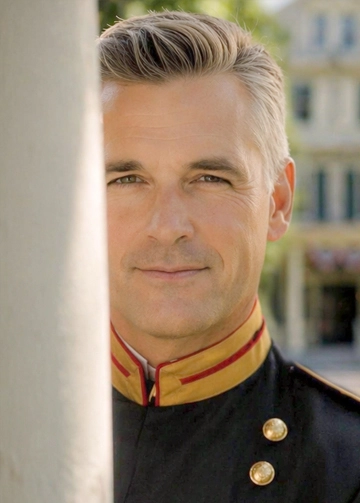






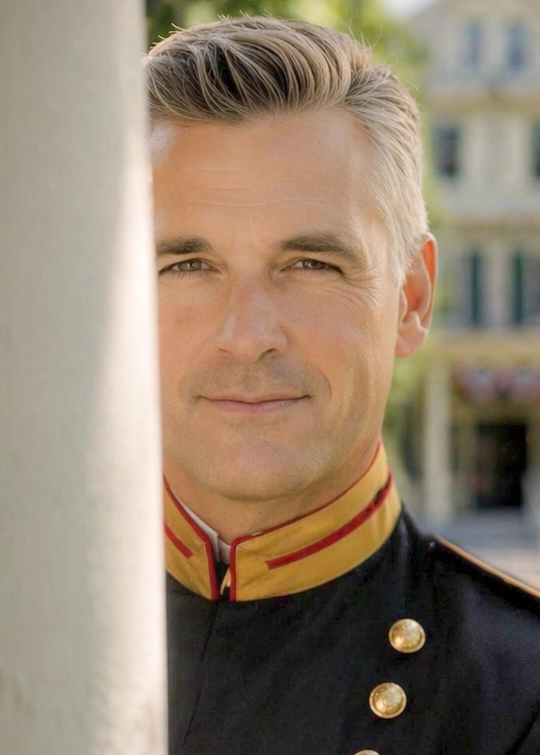


Richard Zampella (SAG/AFTRA) came to filmmaking by a circuitous route. His background includes acting, hospitality, military intelligence, documentary production and historic preservation. Each required close observation: of people, rooms, systems and the ways places change through use.
He grew up on a 100-acre property in the Highlands Region of New Jersey, where his father, a physician, owned and operated a former 48-room resort hotel as a nursing home from 1954 through 1972. It was a working building. Patients moved through its rooms, staff maintained its systems, and his father moved from one responsibility to the next.
Growing up there taught him to notice what kept a place functioning. Architecture mattered, but so did use, routine, maintenance and the accumulation of ordinary activity over time.
Zampella’s first professional path was in acting. He studied at Mason Gross School of the Arts at Rutgers University under William Esper, whose training traced directly back to Sanford Meisner. After moving to Manhattan, he worked in television and film, appearing in series such as Ryan’s Hope, Another World, All My Children and The Guiding Light, as well as in feature films including The Thomas Crown Affair, A Beautiful Mind and Six Degrees of Separation. His work also included national campaigns for Levi’s 501 Jeans, Frangelico, Macy’s, Maybelline and Coca-Cola.
He spent many of those same years in hospitality, working under Joe Baum at the Rainbow Room, and later at Le Cirque with Sirio Maccione and Aureole with Charlie Palmer. He went on to senior management roles at The Plaza Hotel, where he oversaw the Oak Room and Oak Bar, and at Essex House Hotel on Central Park South as Food & Beverage Director. Hospitality sharpened his understanding of how a room works, how people move through it, and how much of an experience depends on details most guests never see.
In 1987, Zampella enlisted in the United States Army, completing training as a Military Intelligence Analyst (96B) and serving for over sixteen years on the General Staff (G2) of the 50th Armored Division. He retired with the rank of Staff Sergeant. The work reinforced habits of analysis, structure and long-term responsibility that later carried into production and preservation.
In 2006, he moved full-time into film production, working as a Producer & Editor with writer and director John Mulholland. Their collaboration on Cooper & Hemingway: The True Gen was named a New York Times Critics’ Pick. In his review, Andy Webster wrote about the endurance of Cooper and Hemingway and what they represented.
The collaboration helped establish the working method at Transmultimedia Entertainment: research first, close attention to detail, and enough context for a story to remain understandable after the immediate moment has passed.
Work for Paramount Pictures, Lionsgate Entertainment and Warner Home Video included long-form documentary production and archival storytelling. For American Public Television, Inside High Noon, narrated by Matthew Rhys, and Elmore Leonard: But Don’t Try to Write, narrated by Campbell Scott, were distributed nationally for public television and broadcast internationally on PBS America. Sergeant York: Of God and Country, narrated by Liam Neeson, continued that interest in character, history and context.
As Creative Director of Transmultimedia Entertainment, Zampella works across cinematography, editing, motion graphics, sound design, lighting and final delivery. The company produces broadcast-compliant masters for network television and streaming platforms. Technical work matters because it is what gets the story from source to screen without losing what made it worth telling in the first place.
Over time, filmmaking and preservation became related disciplines for him. Both require attention to what is already there, an understanding of how the parts fit together, and restraint about what should be changed.
That connection became explicit when Zampella returned to the Highlands and assumed stewardship of Idylease, the historic property where he had grown up. Caring for the building and surrounding land brought memory, responsibility, use and time into the same frame.
The writing grew from that return. In Idylease, a literary memoir of time, memory and place, Zampella returns to the landscape of his childhood and to the responsibilities that eventually drew him back. The book is non-chronological. It follows memory as it surfaces and examines the distance between where a life begins and what later comes to depend on it.
The films, the preservation work and the memoir now overlap in ways that were not obvious at the outset. For Zampella, they return to the same question: what deserves to be remembered, and what responsibility follows once you recognize that it can disappear.